Apparition of Bloom
11.06 — 05.07.26
opening 11.06.2026 //18:30 // part of the Project Space Festival
Jonas Brinker | Patricia Detmering | Nancy Görlach | Juliane Tübke
curated by Patricia Detmering
EN
“All is leaf.”
With this sentence, Johann Wolfgang von Goethe introduces his search for the Urpflanze while simultaneously pursuing the idea that there must exist an underlying, perfect and ideal primal form of nature. This way of thinking carries within it an almost ideological hope for wholeness, yet ultimately remains unresolved and collapses in the face of the diversity of actual appearances. “The Bloom” marks the moment in which Goethe writes to his beloved Christiane that he had deceived himself, and that the Urpflanze could only ever exist as a theoretical abstraction.
Apparition of Bloom takes this idea as its point of departure and shifts it from botany into psychological, material and symbolic contexts. The exhibition is less concerned with nature as a harmonious system than with those moments in which such human constructions of order begin to fracture. It situates itself precisely where the claim to a closed and coherent form begins to fail, giving way instead to tensions and ruptures.
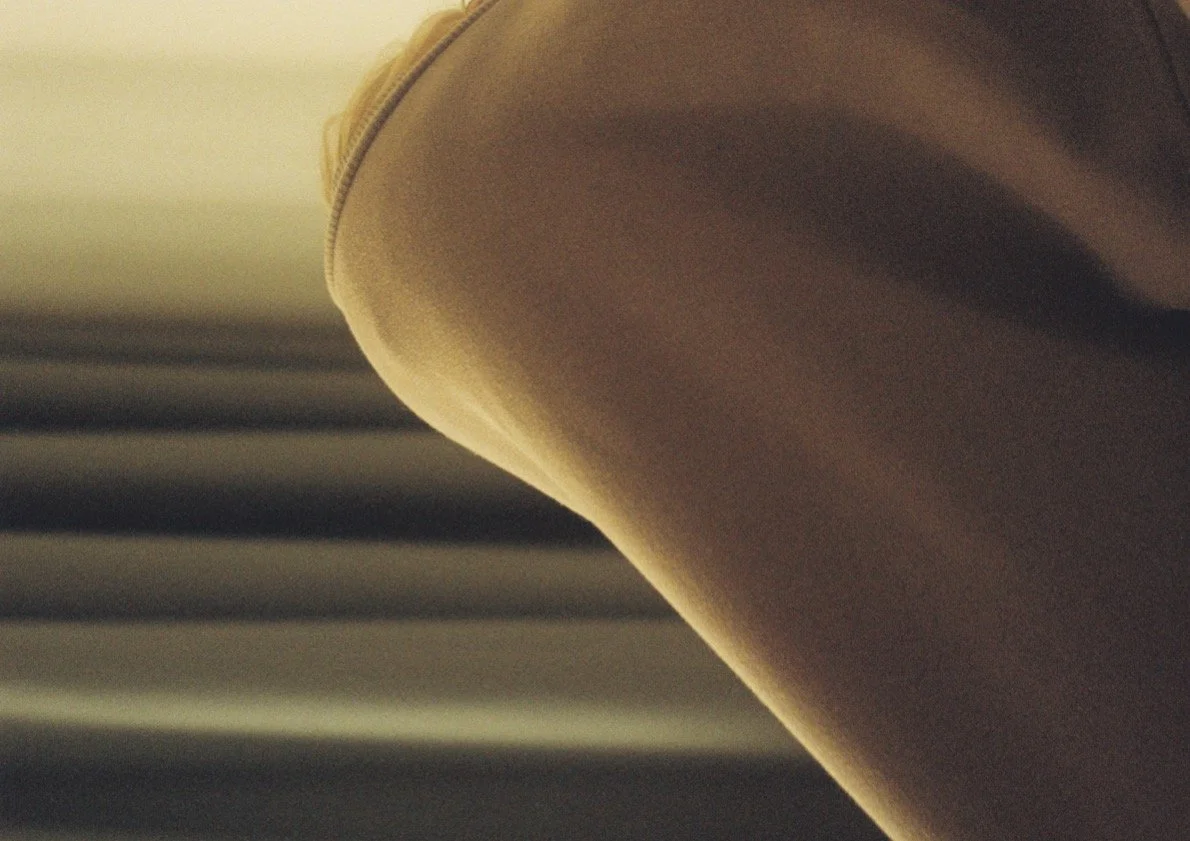
The works of Jonas Brinker, Juliane Tübke, Nancy Görlach and Patricia Detmering present visual states in which formr efuses to stabilize. Bodily, vegetal and abstract elements shift into one another without ever becoming fully fixed. Nature becomes less a motif than a kind of carrier for affective states and associations that deliberately remain only partially articulated.
Against this background, the exhibition can also be read as a commentary on the present. At a time in which many social debates demand clarity and certainty, the pressure to reduce ambiguity continues to grow. At the same time, the desire for meaning and coherence persists. Apparition of Bloom does not attempt to resolve this contradiction. Ambiguity is not understood here as a problem, but as an inherent part of experience.
Change thus appears not as a linear development, but as a fragile process: forms emerge, decay and reappear. What remains is not a resolved image, but a movement between the desire for wholeness and the experience that things remain open and incomplete.
DE
„Alles ist Blatt.“
Mit diesem Satz beschreibt Johann Wolfgang von Goethe, einleitend die Suche nach seiner Urpflanze und verfolgt damit zugleich den Gedanken, es müsse eine zugrunde liegende, vollkommene und ideale Grundform der Natur geben. Dieses Denken trägt eine fast ideologische Hoffnung auf ein Ganzes in sich, bleibt jedoch letztlich ungelöst und scheitert an der Vielfalt der tatsächlichen Erscheinungen. „The Bloom“ wird der Moment in dem Goethe zu seiner Liebsten, Christiane schreibt, dass er sich selbst getäuscht hatte und die Urpflanze nur ein theoretisch abstraktes Konstrukt sein kann.
Apparition of Bloom nimmt diese Vorstellung als Ausgangspunkt und verschiebt sie aus der Botanik in psychische, materielle und symbolische Zusammenhänge. Die Ausstellung interessiert sich weniger für Natur als harmonisches System, sondern viel mehr für die Stellen, an denen solche vom Menschen erdachten Ordnungen brüchig werden. Sie setzt genau dort an, wo der Anspruch auf eine geschlossene Form nicht aufgeht und sich stattdessen Spannungen und Brüche zeigen.
Die Arbeiten von Jonas Brinker, Juliane Tübke, Nancy Görlach und Patricia Detmering zeigen Bildzustände, in denen sich Form nicht stabil hält. Körperliche, pflanzliche und abstrakte Elemente verschieben sich ineinander, ohne je ganz fest zu werden. Natur wird dabei weniger Motiv als eine Art Träger für affektive Zustände und Assoziationen, die bewusst nur angedeutet bleiben.
Vor diesem Hintergrund lässt sich die Ausstellung auch als Kommentar zur Gegenwart lesen. In einer Zeit, in der viele gesellschaftliche Debatten nach Eindeutigkeit verlangen, wächst der Druck, Ambivalenz zu reduzieren. Gleichzeitig bleibt das Bedürfnis nach Sinn und Zusammenhang bestehen. Apparition of Bloom versucht nicht, diesen Widerspruch aufzulösen. Ambiguität wird hier nicht als Problem verstanden, sondern als Teil jeder Erfahrung.
Veränderung erscheint so nicht als lineare Entwicklung, sondern als fragiler Prozess: Formen entstehen, zerfallen und tauchen wieder auf. Was bleibt, ist kein abgeschlossenes Bild, sondern eine Bewegung zwischen dem Wunsch nach Ganzheit und der Erfahrung, dass Dinge offen und unvollständig bleiben.